Why Choose Grimes for Cremation?
Not Sure Where to Begin?
For most people, tradition plays an important part in life. In trying times, such as the death of a loved one, familiar traditions help us cope with the loss of someone significant in our lives. With cremation services, this is no different — that's why our list of services includes many options.
We believe you should be able to choose the type of cremation service that you find most meaningful.
Contrary to what most people believe, cremation does not limit one's choices, nor does the choice of cremation necessarily eliminate a funeral service. A funeral service followed by cremation need be no different than a funeral service followed by ground burial.
Cremation Arrangements
Cremation offers families a variety of options — from elaborate and traditional to dignified and simple. Grimes Funeral Chapels offers a variety of service options and packages, including a full traditional service followed by cremation, a memorial service after cremation, and immediate cremation (without service). Our helpful staff can assist you in selecting the service that is appropriate for your family and fits your budget.
Includes a viewing or visitation and ceremony at the funeral home, church, or other venue followed by cremation. A graveside or committal service may then be held. Flowers, pictures, and memorabilia are displayed. Register books, thank you cards, memorial folders, and a Video Memorial are available.
A memorial service is one where the physical body is not present. Cremation may have already taken place and your loved one will be in an urn. This allows time for loved ones to gather if they live far away. Photos, mementos, and memorabilia may be brought in to personalize the service.
Our most basic option. The body is cremated shortly after death when necessary documents are received. The cremated remains are placed in an urn or other container. The remains can be kept in the home, buried, placed in a niche, or scattered in a favorite spot.
No matter which type of service is selected, we can help you give your loved one a special, dignified, and personalized farewell. All of our services can be customized to meet any family's needs or wishes.
It is recommended that when you are arranging for a cremation, it be done prior to immediate need. This gives you the benefit of making arrangements without the pressure of time. The first thing you need to do is put your wishes in writing.
In Texas, Health and Safety Code 711.002 allows a person to preplan their own cremation. If your wishes are not documented prior to death, the right to control disposition falls to: (1) a person designated in a legal written instrument; (2) the surviving spouse; (3) any surviving adult child; (4) either surviving parent; (5) any surviving adult sibling; or (6) the next degree of kinship. It is our policy that all proper signatures be retained from the appropriate next of kin.
When selecting a cremation provider, make sure you:
- Ask friends and others in your community what they know about the firm
- Seek advice from your clergy regarding your choice
- Do not choose a firm based solely on price
- Determine the type of services you would like — the type of service you request will be the determining factor in cost: cremation with visitation and embalming; memorial service with or without the cremated remains present; traditional church service; or direct cremation with no service
We believe in the dignity and respect in the care of the deceased, in compassion for the living who survive them, and in the memorialization of life. Cremation should be considered as preparation for memorialization — the deceased of our society should be commemorated in a manner suitable to the survivors.
Below are some of the most common questions families ask when considering cremation.
As more and more people plan ahead, we hear from many individuals that they don't want a big "fuss" when they are gone — they "just want to be cremated."
Cremation is a versatile option because it provides ample time for the family to gather, it allows for easy transportation of the remains, and it makes for a simple and easy means of disposition.
However, the notion that there shouldn't be any "fuss" is simply a misunderstanding of the reason we have funeral and memorial services in the first place. We need to take time to remember and mourn our loss; otherwise, we never experience any type of closure. The purpose of the funeral or memorial is to help us face the pain of our loss, acknowledge the reality of the death, receive the support of our loved ones, and remember and honor a life that we have cherished.
A few considerations when choosing cremation:
- Cremation may be carried out before the memorial service or afterward.
- The body may be dressed and present in a ceremonial rental casket to allow friends and family to say their final goodbyes — especially significant if the death was sudden and unexpected.
- The service may be a simple, informal gathering of close family or a public honoring of the deceased.
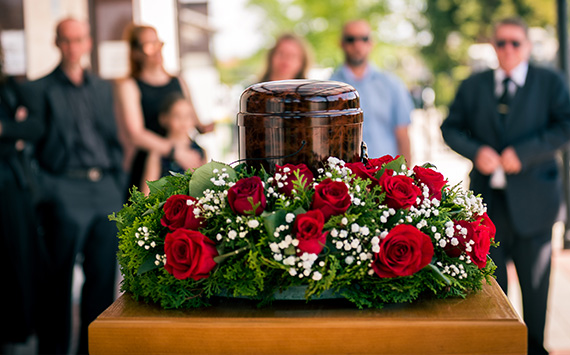
- If the memorial service is held after the cremation, it is important to have the urn present. The urn is not merely a container — it is a memorial of the deceased.
- There are many options for memorialization after the cremated body is returned to the family: buried in a cemetery, placed in a columbarium, kept at home, scattered, used in cremation jewelry, or portioned off for different uses.
- Generations from now, family members will want to be able to visit a permanent memorial — a gravestone, grave marker, or plaque should be considered.
With cremation, there are even more options available to families than with traditional in-ground burial. The key is to plan ahead and put all wishes in writing so that when a death occurs, the family doesn't have to worry about which options to choose.